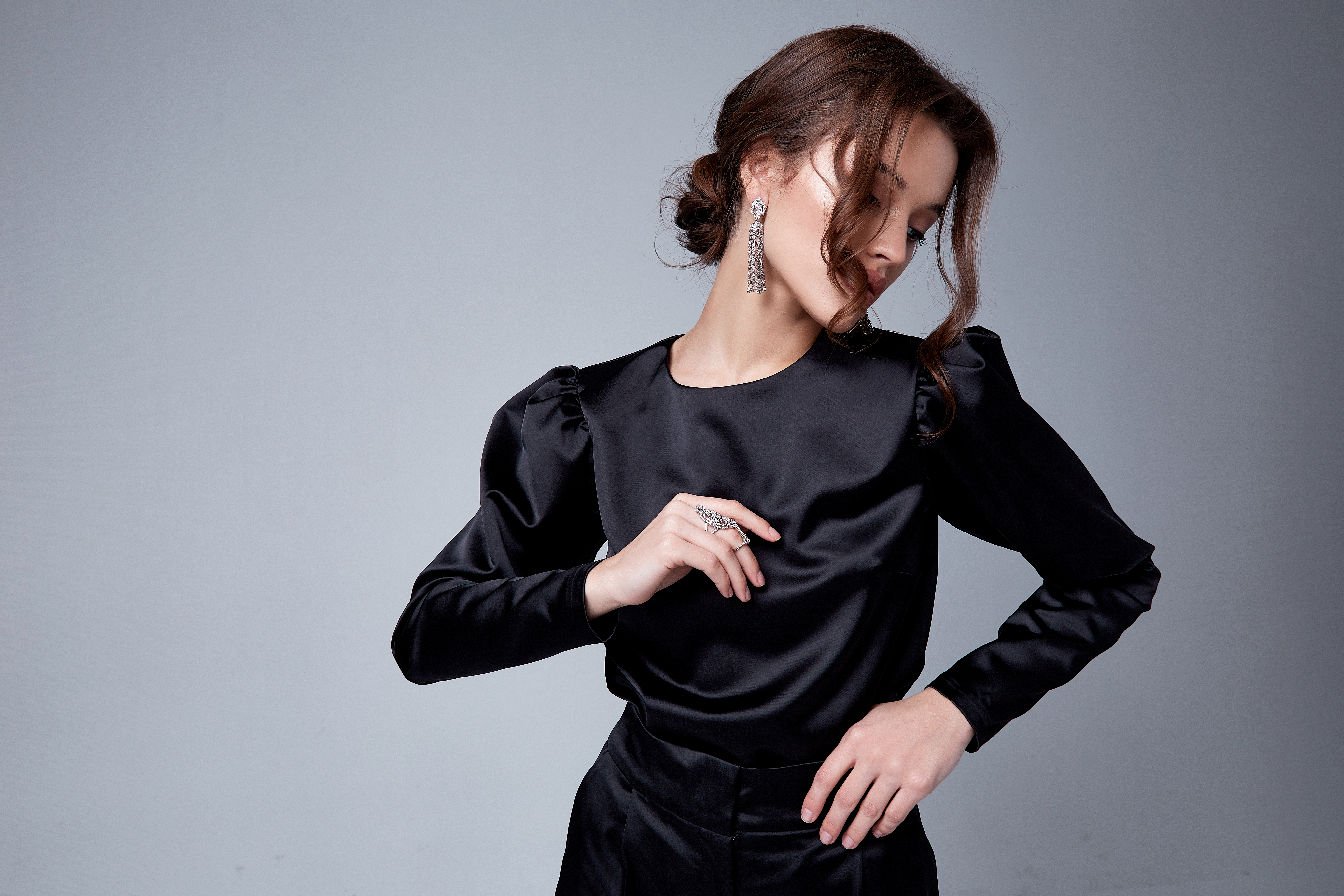
NEROdistinto & Its Fabrics: 6 Key Points to Understand Total Black Fashion

The selection of fabrics for NEROdistinto was the result of months of research, including visits to industry fairs, explorations of the most renowned textile districts (Como, Gallarate-Busto Arsizio, Prato, etc.), and targeted showroom visits.

1. Black Is Not a Last-Minute Decision

The selection of fabrics for NEROdistinto was the result of months of research—industry fairs, explorations of the most renowned textile districts (Como, Gallarate-Busto Arsizio, Prato, etc.), and targeted showroom visits.
We touched and examined hundreds of black fabrics: lace, silk, cotton, satin… Soft. Comfortable. Draping. We asked ourselves: “Will they feel tight or glide smoothly? Will they wrinkle? And in summer, will they keep us cool? But most importantly—how will they fall on the body?”
We were buried under mountains of fabric samples, which we meticulously categorized by type, weight, and weave, creating a super-organized “Black Archive.” Now, the finest “only black” fabrics out there have no secrets for us.

2. Natural Fibers? Yes, Please!

At NEROdistinto, we love high-quality Italian black fabrics—preferably natural—because they ensure optimal thermal balance, keeping us warm in winter and cool in summer. Natural fibers “breathe with us,” allowing our skin to breathe too, giving us a constant feeling of comfort.
But that’s not all. Natural fabrics last longer, require fewer washes, and don’t retain odors. Why? Because they absorb moisture, limiting the growth of bacteria—the real culprits behind bad smells.
That’s why our collections prioritize natural fabrics. Next in line are recycled materials, low-impact textiles, and new-generation artificial fibers like responsibly sourced viscose, made from natural raw materials. As for the rare synthetic elements (like sequins), we’ll pair them with high-quality linings (never polyester!) so that your skin, dear Black Lovers, can breathe naturally.

3. The Future of Fashion? Increasingly Circular

It’s a fact: disposable fashion is definitely going out of style, and European regulations are preparing to change the rules of the game. By 2030, the textile industry will also have to embrace the circular economy, committing to making fabrics more durable, repairable, reusable, recyclable, and free of harmful substances.
The textile industry is, after all, the second most polluting industry in the world, following only the oil industry. Its environmental impact is critical, including excessive freshwater consumption, greenhouse gas emissions, and the massive textile waste caused by poor-quality garments and the disposal of unsold inventory.

4. Sustainability is Cool!

At NEROdistinto, we are fully aligned with sustainability: we favor high-quality black fabrics sourced from luxury brands’ production surplus, giving them new life through refined finishes, updated dyes, and fresh styling. These certified fabrics gain renewed value through a completely circular approach.
Additionally, we embrace good practices like pre-ordering, which helps us avoid excessive warehouse stock and unsold items. We are also committed to creating thoughtful collections made of long-lasting, versatile pieces designed to mix and match seamlessly.

5. Slow Fashion Beats Fast Fashion

Fast fashion has dominated the past decades, driven by major clothing groups producing over 50 collections a year per brand, offering low-quality garments at rock-bottom prices. The consequences?

  •  Environmental damage: tons of textile waste generated by cheap materials and unsold stock.
  • Social injustice: underpaid labor in developing countries where production costs are kept to a minimum.

At NEROdistinto, we stand by the Slow Fashion philosophy, which encourages mindful wardrobe choices. We prioritize well-made pieces that enhance our style and are designed to endure. We also support brands—especially small, artisanal ones—that prioritize quality, ethics, and durability.
In short, it’s a slower, more intentional way of dressing—one to savor day by day. Over time.

6. CPW: The Magic Formula for Savvy Shopping

Did you spot that tulle skirt that makes you go crazy? We’re happy for you. But before you swipe your card or click “Buy,” we suggest calculating the CPW. CPW stands for Cost Per Wear, and it’s calculated by dividing the cost of the item by the number of times you’ll likely wear it before you stop wearing it.
For example, if the skirt—of good quality—costs €250 and you plan to wear it about 25 times a year for 2 years, the CPW would be €5. CPW is interesting because it busts a few myths. One of the most persistent is thinking that “fast fashion” purchases are always a bargain. Not necessarily!
Yes, because if you buy a €20 t-shirt on impulse but only end up wearing it twice, the CPW is €10, which is twice as much as the CPW of the tulle skirt. This shows that price shouldn’t be the only deciding factor; the quality of the garment, its durability, and how much you’ll get to wear it for your outfits also matter.
Now that you know all about our fabrics and our approach to fashion, join our Distinto Club. You’ll discover a world of exclusive privileges and get early access to our Collections.

Subscribe to Our Newsletter

Black is more than just a color—it’s a way of being. If you feel the same, NeroSuBianco is the newsletter you can’t miss.

Discover the latest NEROdistinto trends, get style tips, join events and workshops, and access exclusive initiatives. Stay ahead with just one click!

This site is registered on wpml.org as a development site. Switch to a production site key to remove this banner.